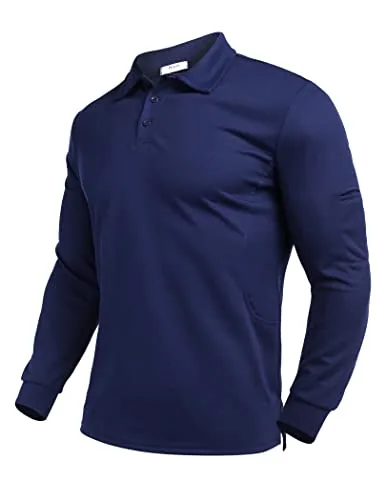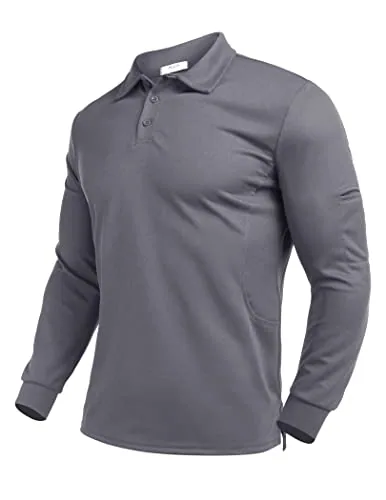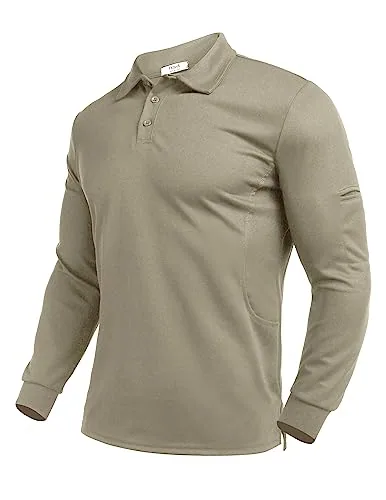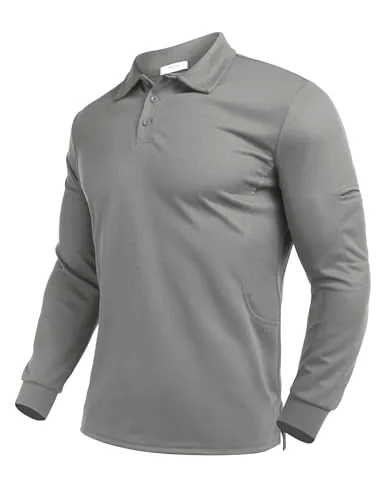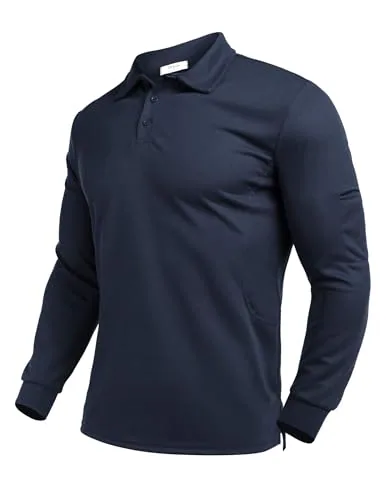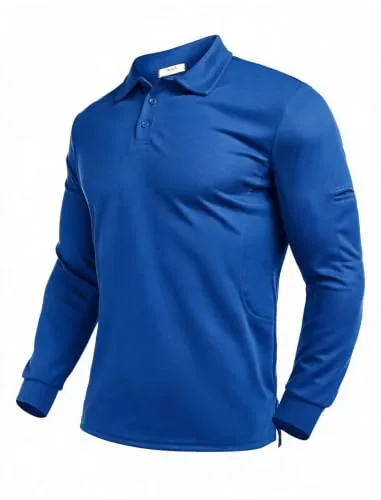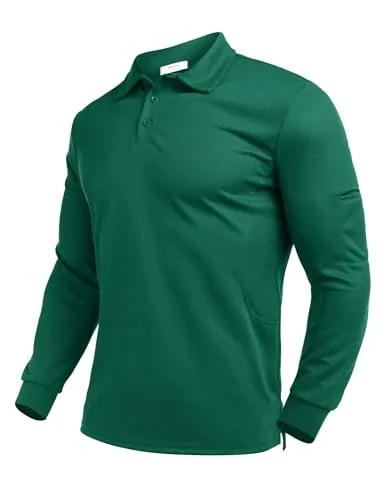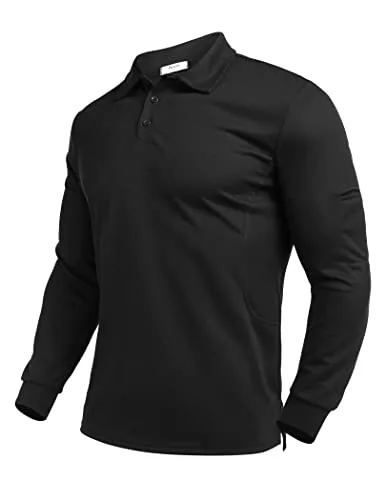
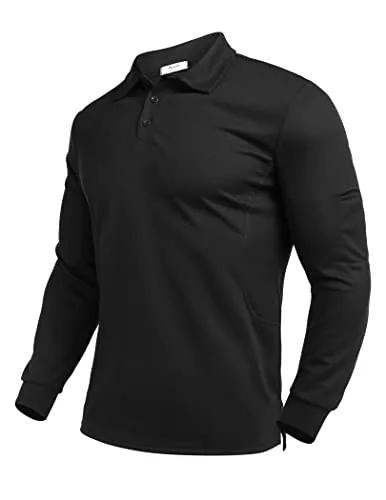
Men's Long-Sleeve Polo, Black
4.3 out of 5 from 2,614 ratings
$17.99
ML
See the details
Certification
There are two kinds of statement on a garment: the ones a federal rule requires, and the ones a maker chooses to make. Here is which is which for this range, what the UPF number on the polo does and does not certify, what the public health guidance actually says about clothing and sun, and the plain answer to whether any piece here is a medical product.
10 minute read · sources read 5 September 2026
4.3 out of 5 from 2,614 ratings
$17.99
4.3 out of 5 from 2,614 ratings
$14.99
4.3 out of 5 from 2,614 ratings
$14.99
4.3 out of 5 from 2,614 ratings
$19.99
See the detailsA visitor who searches a clothing site for certifications usually asks a fair question: who checked what? The fair answer starts by separating two kinds of statement that share a label.
The first kind is required. A federal rule puts the fibres in the garment and the care instructions on a label, in a set form, and a maker who leaves them off breaks the rule.
The second kind is chosen. UPF 50+, quick-dry, soft, breathable, post-surgery, chemo-friendly: no rule requires any of these, no rule defines most of them, and a maker who prints them is making a claim. This page walks through both kinds for the Deyeek lineup and ends with a table that says, line by line, which is which.
Two federal rules cover every garment in this catalogue. The first is about what the piece is made of, and its most basic instruction is about language.
All required information shall be set out in the English language.
16 CFR 303.4, English language requirement, read 5 September 2026
The second is about how the piece is cared for.
Care labels must state what regular care is needed for the ordinary use of the product.
16 CFR 423.6(b), Textile wearing apparel, read 5 September 2026
These two statements are the only ones a garment in this range carries under a rule, in the plain sense that the rule requires them and the maker answers for them. They live on the sewn-in label. Our materials page and quality page quote the rules at length and count how often the maker's descriptions repeat what the label must say.
The long-sleeve polo is the one piece in the range that carries a rated claim: the maker calls it UPF 50+. UPF is a real measurement. It describes how much ultraviolet light a fabric lets through, and a laboratory can test it against a published standard. A fabric rated 50+ blocked at least 98 percent of the ultraviolet in somebody's test.
What a UPF number on a description does not tell you is who measured it, on which batch, and whether the test is published. Deyeek publishes no test report for this range. So on our pages the number stays what it is on the maker's page, a claim, printed under the heading that names it as the maker's. That is not a judgement on the polo. It is the difference between a claim and a certificate, and it is the whole point of this page.
The public health guidance on skin cancer prevention does not mention UPF ratings at all. It says something simpler.
Wear clothing that covers your arms and legs.
Centers for Disease Control and Prevention, Reducing Risk for Skin Cancer, read 5 September 2026
Cover, first. A long sleeve covers a forearm whatever its rating, and a short sleeve does not. The guidance goes on: where protective clothing and a hat are not practical, sunscreen goes on all exposed skin. Read against a polo, that puts the long sleeve ahead of the number on the label, and it puts sunscreen on the hands and the neck the polo leaves bare.
Four of the seven benches on this site exist because of an operation, a treatment or a period of care. That makes the question unavoidable, and the answer is short. No piece in the Deyeek lineup is a medical device. None carries an FDA registration, no clinician has reviewed one, no clinic has tested one, and neither this site nor, as far as we can read them, the maker's pages claim any of those things.
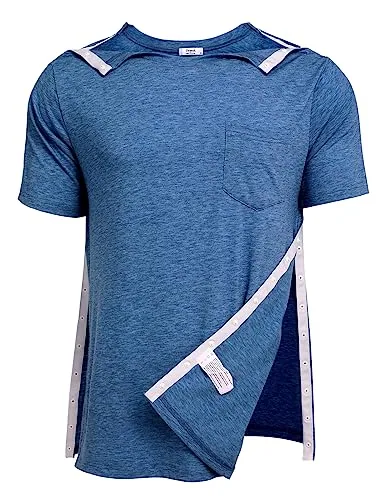
What the pieces are is clothing with openings in useful places. A shirt that opens over the shoulder does not treat the shoulder. A top with a chest placket does not do anything for the port under it except get out of its way. Whether a given piece suits a given recovery is a question for the surgeon or the care team. Our pages do not answer it and do not try to.
Every statement a visitor might expect to find certified, against its status for the Deyeek edit.
| Statement | Status | On this site |
|---|---|---|
| Fibre content by weight | required by federal rule | on the garment label, stated in the description on 447 pages |
| Care instructions | required by federal rule | on the garment label, mentioned in the description on 428 pages |
| Country of origin | required by federal rule | on the garment label, not in the descriptions we receive |
| UPF 50+ | maker's claim, no test published | printed as the maker's words on 26 pages |
| Quick-dry, breathable, soft | maker's claim, not defined by any rule | printed as the maker's words |
| Medical device registration | would require FDA registration | none: these are clothes |
| Clinical review or endorsement | would be a named clinician or body | none, and none is claimed |
| Laboratory testing of any kind | would be a published report | none published for this range |
Three lines at the bottom say none, and they are the reason this page exists. A site that listed a document it could not show would be worse than one that says plainly what it holds.
A method rather than a rule, and it works on any garment page anywhere.
If a garment in this category ever carried a document worth the name, it would look like one of three things. A published UPF test naming the standard, the batch and the laboratory. A fibre or safety certificate from a named textile scheme, with a number you can check on that scheme's register. Or, for anything that claimed to be a device, an FDA registration.
The maker publishes none of the three for this range. When one appears, this page will name it, link to it and print the date we read it, the way we handle every source on this site.
4.3 out of 5 from 2,614 ratings
$17.99
4.3 out of 5 from 2,614 ratings
$14.99
4.3 out of 5 from 2,614 ratings
$14.99
This page describes clothing. It gives no medical advice, and no clinician has reviewed it. You and your care team decide what to wear after surgery, during treatment or in care.
4.3 out of 5 from 2,614 ratings
$19.99
See the details4.3 out of 5 from 2,614 ratings
$19.99
4.3 out of 5 from 2,614 ratings
$17.99
See the details4.3 out of 5 from 2,614 ratings
$19.99
See the details