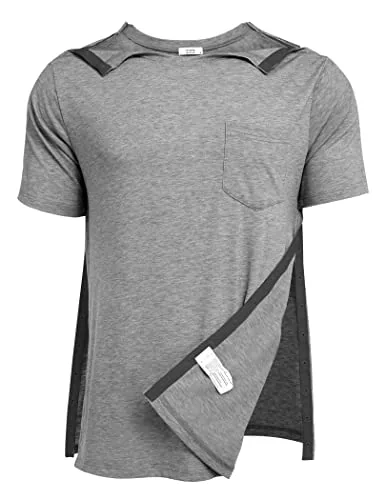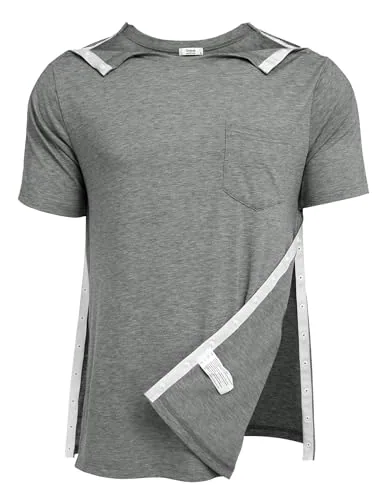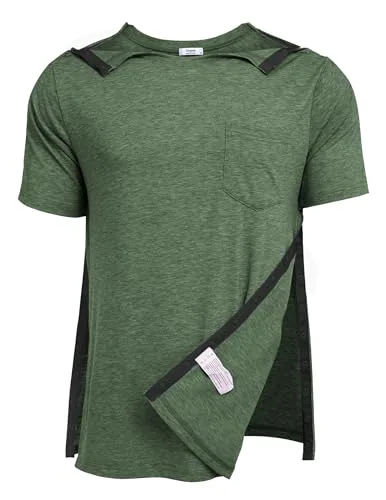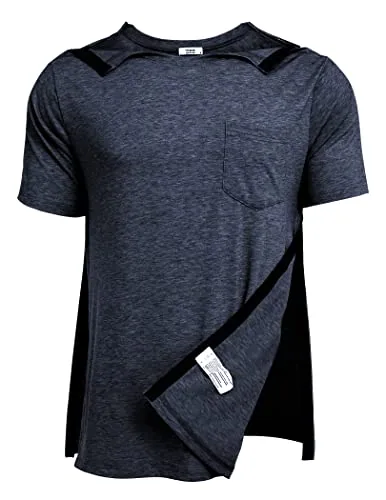
Men's Short-Sleeve Tear-Away Shirt, Black
4.6 out of 5 from 1,755 ratings
$19.99
LXL
See how it opens
The specifics
Every adaptive piece in the range has an opening where an ordinary garment has a seam. Here is where each kind of opening runs, what it is for, what the public health guidance says about the situations it serves, and what it does not do.
12 minute read · sources read 5 September 2026
4.6 out of 5 from 1,755 ratings
$19.99
4.6 out of 5 from 1,755 ratings
$19.99
See how it opens4.6 out of 5 from 1,755 ratings
$19.99
4.6 out of 5 from 1,755 ratings
$23.45
An ordinary shirt assumes two working shoulders. You raise both arms, the shirt drops over the head, the arms find the sleeves. Take one shoulder out of that sequence and the shirt cannot be put on at all. The discharge guidance for shoulder surgery is direct about how long that lasts.
You will need to wear a sling or shoulder immobilizer when you leave the hospital.
MedlinePlus, Shoulder surgery - discharge, read 5 September 2026
Wear the sling or immobilizer at all times, unless your surgeon says you do not have to.
MedlinePlus, Shoulder surgery - discharge, read 5 September 2026
At all times means at all times, including while getting dressed. So the shirt has to change, not the arm. Adaptive clothing is the plain answer to that: the garment opens along a seam an ordinary garment keeps closed, so the body stays still and the fabric moves around it. The rest of this page is a tour of where those seams run in the Deyeek range, one kind at a time.
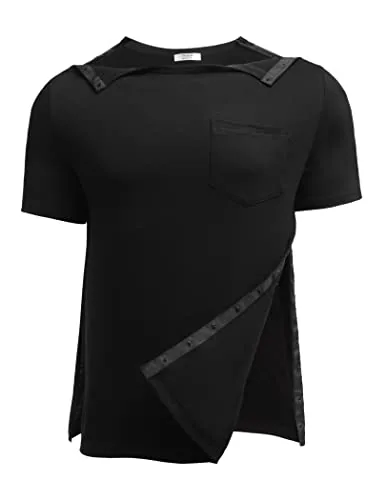
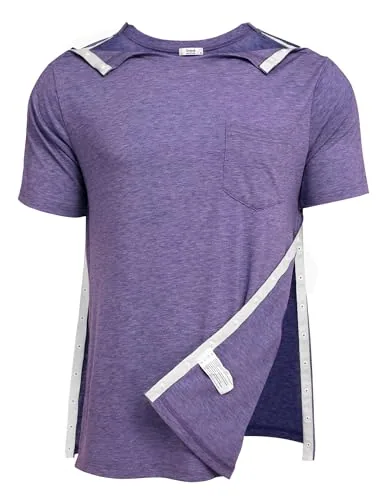
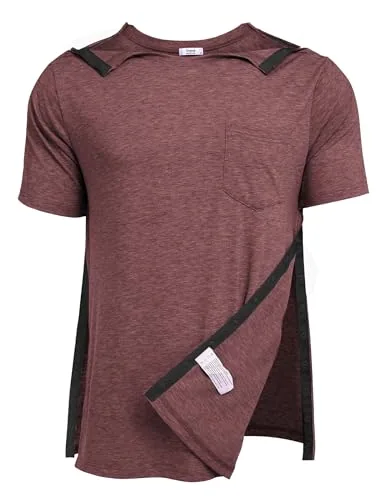
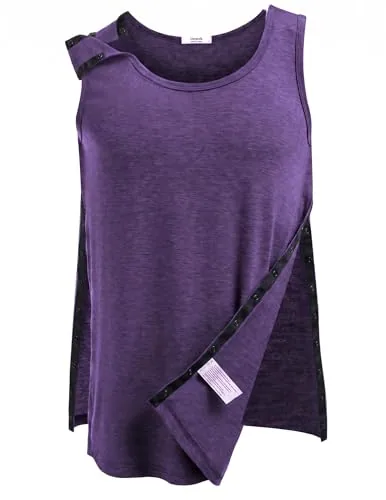
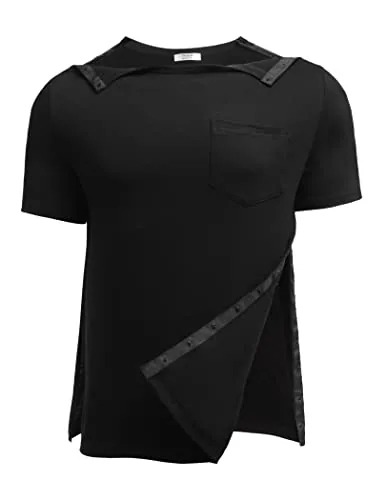
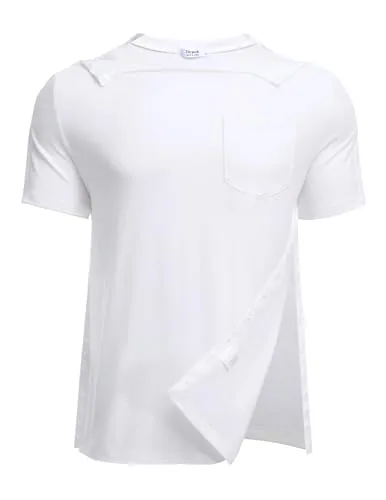
The most common opening in the range runs from the hem up the side of the body, under the arm and along the top of the sleeve to the collar. With every snap undone the shirt is a flat piece of fabric with a neck hole. It is laid across the lap or the bed, the operated arm is placed on it without leaving the sling, the good arm goes through its sleeve normally, and the seam is closed from the hem upwards.
What matters in the design is the last four inches, over the shoulder. A shirt that opens only at the side still asks the arm to slide into a sleeve. A shirt that opens over the shoulder as well never does. Every page in the post-surgery bench says which of the two it is, under Opening.
Closed, the seam reads as a seam. The snaps sit in a placket the width of a finger and on most pieces are the colour of the shirt.
A port changes a different part of the shirt. The National Cancer Institute describes what it is in two sentences.
A port is a small, round disc that is placed under your skin during minor surgery.
National Cancer Institute, Chemotherapy to Treat Cancer, read 5 September 2026
A catheter connects the port to a large vein, most often in your chest.
National Cancer Institute, Chemotherapy to Treat Cancer, read 5 September 2026
Most often in your chest, high and to one side. On a treatment day the nurse reaches the port through the skin, and a crew neck means undressing to the waist in a treatment room. Deyeek pieces in the port bench put an opening there instead: a short zip or a snap placket at the upper chest that folds down to a hand's width of skin, then closes.
Some pieces add an opening along the arm for a line. The mastectomy tops carry pockets inside for a drain bulb, so the bulb hangs where the pocket is rather than on a safety pin.
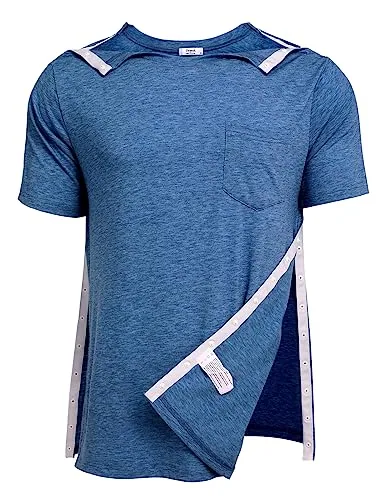
The third opening is for a person who is being dressed rather than dressing. A gown that opens down the back goes on from the front while the wearer lies or sits, and comes off the same way, without an arm being raised or a head being lifted. The National Institute on Aging's guidance for caregivers starts from the other end, with the person's own hands.
Allow the person to dress on their own for as long as possible.
National Institute on Aging, Alzheimer's Caregiving: Bathing, Dressing, and Grooming, read 5 September 2026
Lay out clothes in the order the person should put them on, such as underwear first, then pants, then a shirt, and then a sweater.
National Institute on Aging, Alzheimer's Caregiving: Bathing, Dressing, and Grooming, read 5 September 2026
A gown with snaps down the back, or across one shoulder, fits both halves of that advice. The person who can still manage a front and one arm does. The person who cannot is dressed without being moved. The Deyeek gowns are cut longer than a ward gown and in a fabric that reads as a nightdress, because the person wearing it is at home.
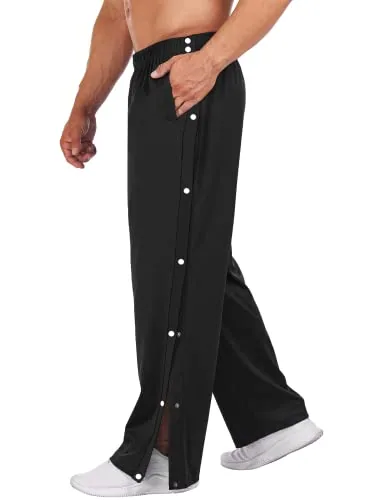
After a hip or a knee the problem is the bend, not the waist. Adaptive pants open on a seam that runs from the ankle to the waist down the outside of each leg. Undone, the pants lie flat on the bed. The leg is laid on top. The seam closes from the ankle up. The knee never bends, the foot never points, and a brace or a cast is inside the pants rather than fighting them.
Closed, they are sweatpants with a stripe of snaps down each side. Some people feel the snaps when lying on that side, and the page says so.
Three fastenings do the opening in this range. Counted from the catalogue at the last update:
| Fastening | Pieces | In practice |
|---|---|---|
| Snaps | 776 | one hand, from the outside, audible, hold under a sling |
| Hook and loop | 102 | fastest to open, catches on knit fabric in the wash |
| Magnets | 26 | closes by itself, the maker's pages carry their own notes on implanted devices, read them |
Snaps are the default because they can be worked with one hand from the outside and they hold under a sling. Hook and loop is quicker but marks knit fabric in the wash. Magnets close by themselves and are the easiest to manage with weak hands. Where the maker adds a note about implanted devices on a magnetic piece, that note is on the maker's page and we do not shorten it.
Here is each opening against the number of pages in the catalogue that carry it, so you know what is in stock before you look.
| Opening | Bench | Pages | What it lets you do |
|---|---|---|---|
| Side seam, hem to underarm | post-surgery shirts | 326 | the arm goes in without a sleeve being threaded |
| Seam over the shoulder to the collar | post-surgery shirts, port tops | 52 | the shoulder is uncovered without lifting |
| Placket or zip at the upper chest | port and dialysis tops | 240 | a port is reached with the top on |
| Inside pockets for a drain bulb | mastectomy tops | 75 | the bulb hangs where the pocket is, not on a pin |
| Back seam, neck to hem | gowns | 111 | the gown goes on from the front on a person lying down |
| Outside-leg seam, ankle to waist | adaptive pants | 196 | the pants go on without the knee bending |
4.6 out of 5 from 1,755 ratings
$19.99
4.6 out of 5 from 1,755 ratings
$19.99
See how it opens4.6 out of 5 from 1,755 ratings
$19.99
4.6 out of 5 from 1,755 ratings
$23.45
Three limits, and none of them are hidden.
It does not hold anything in place. A sling holds the arm. A dressing covers the wound. The shirt only stays out of the way of both.
It does not dress you on the first morning. Snaps are easier to close from the outside than from inside a sling. The first time, and often for a week, a second pair of hands still helps. Every page in the adaptive benches says so.
It is not a device and it has not been reviewed by a clinician. These are clothes. Whether a given opening suits a given recovery is a question for the surgeon or the care team, and the pages here do not answer it.
Four things to do before the day the ordinary shirt stops working.
This page describes clothing. It gives no medical advice, and no clinician has reviewed it. You and your care team decide what to wear after surgery, during treatment or in care.
4.6 out of 5 from 1,755 ratings
$19.99
See how it opens4.6 out of 5 from 1,755 ratings
$25.99
See how it opens4.6 out of 5 from 1,755 ratings
$24.99
See how it opens4.5 out of 5 from 1,076 ratings
$19.99
See how it opens